Dry Rot and Structural Rot Repair
Due to the wet climate, dry rot is especially prevalent in the Pacific Northwest.
The term “dry rot” is a misnomer; dry rot is a fungus and requires moisture to live.
Dry rot causes widespread structural damage. Once established, it can quickly spread through the entire building. The source of its moisture must be discovered and eliminated.
It’s a disheartening sight for a homeowner, but Snowridge Remodeling is an expert in dry rot detection, repair, and prevention. If you suspect dry rot, contact us today and keep your home safe.
What is Structural Dry Rot?
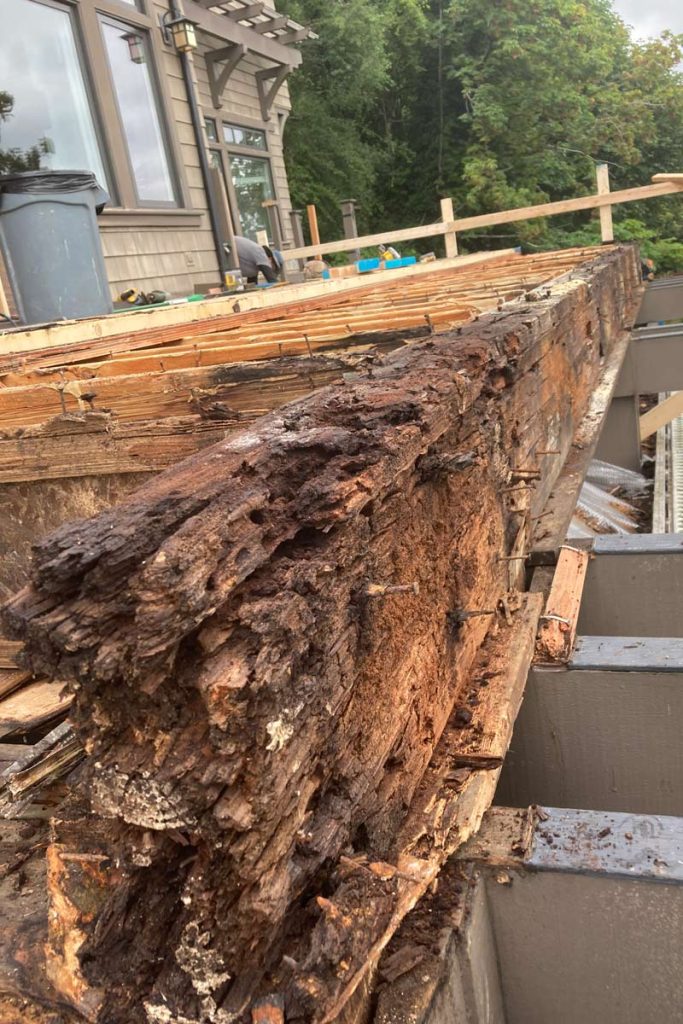
This wood-destroying fungus thrives in untreated wood with moisture content of 20 percent. It sometimes requires opening walls, floors, and ceilings to find out the extent of it.
Usually, structural rot framing needs to be replaced because it past being able to repair with System Three Resins.
Some signs of structural dry rot are:
- Any water leaks in house, old or new (NOTE: many newer homes are built with a fast-growing spruce wood that will rot if not completely primed)
- Wall and ceiling stains or discoloration
- Damp smells
- Loose siding, trim, decks or railing
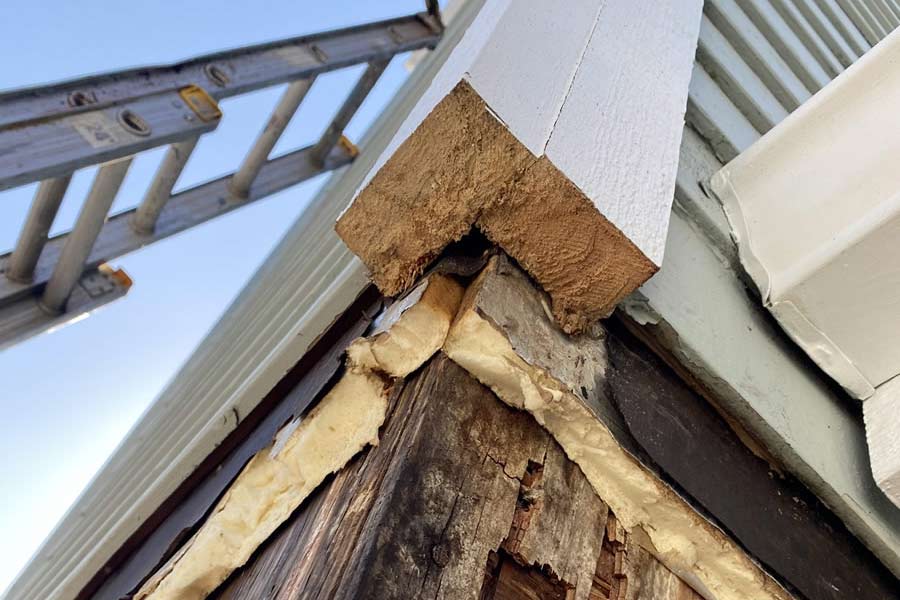
- Visible rot on exterior siding, window trim, door threshold or roofing trim
- Infestation of ants and flying insects in one area.
Areas most common for rot:
- Decks and railing (NOTE: especially roof decks)
- Bathroom floor
- Door thresholds and trim
- Window sills and trim
- Chimneys
- Roof underlayment, soffit, and fascia boards.
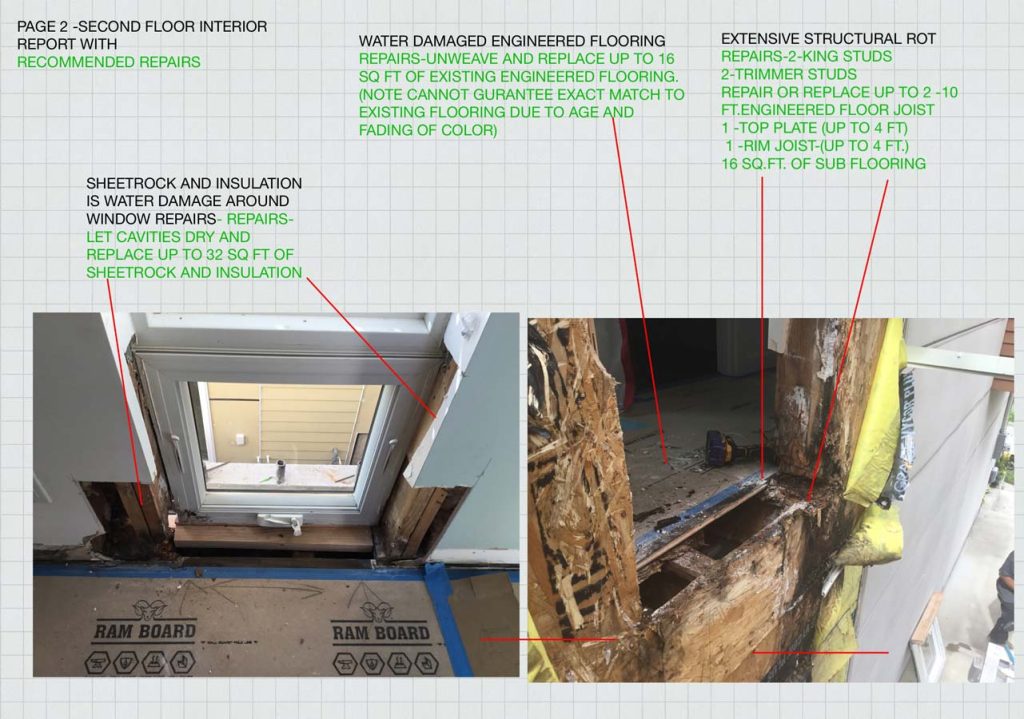
To see the extent of structural frame rot, we must sometimes open walls and ceilings. We provide a Demo and Discovery service.
Top 5 Things to Know About Dry Rot
- Often, the rot is due to improper construction practices. Leaky gutters are also culprits.
- The dry rot fungus soaks up moisture from timber, and then develop strands which can travel across and through bricks and mortar to other timbers in unventilated conditions. It cannot feed on the masonry but carries the moisture with it in the strands to allow it to spread. We’ve found dry rot in walls, decks, framing, and joists.
- The presence of small red ants in your home is a sign that you may have moisture problems.
- The most important step in ridding your home of dry rot is to find the leak that’s feeding it. Eliminating the moisture will keep the fungus from spreading.
- Usually, the repair process involves locating all the damaged wood and either replacing it, or treating it with epoxy products.
Identify Rot Damage with Our Demo and Discovery Process
Snowridge Remodeling’s Demo and Discovery Agreement clearly explains the extent of structural rot damage we find in your home.
We give you a detailed report and accompanying photos to show where, how, and why moisture is causing the structural framing to rot.
The Demo Phase involves removing either flooring, walls, siding, roofing, or decking—anything that is covering up an area of rot damage. After the Demo part is done, we provide temporary protection for the areas that have been opened, guaranteed for up to 3 weeks.
The Discovery Phase involves finding the source and cause of the rot damage. We then give you the detailed report mentioned above, and a detailed, fixed-cost contract to correct the cause of the rot, and to repair the structural and surrounding damage.