Decks
Porches and Decks
The front porch was a fixture of American homes from the Civil-War era until the mid-20th century. It was a place to relax and to see your neighbors. It was also a place to stay cool in the summer. You can still see original porches on 100-year-old homes all over Seattle.
The deck of the porch was old-growth fir, milled so the boards locked into one another, making it a solid surface floor that was sloped to shed water. They were usually designed with a roof, steps, railing, and post to complement the home’s exterior.
It’s humbling to work on these beautiful historical entrances. Matching the original design, moldings, and trim is a challenge. You can still purchase the fir decking, and most composite decking companies offer tongue-and-groove style.
But the original trim and moldings can be hard to locate. Snowridge has copied and milled trim and moldings in our shop when we were unable to find it. The biggest problem with older porches and decks is that their foundations sink over time, especially the entrance stairs. Jacking up and re-pouring the foundations are a common solution.
Decks
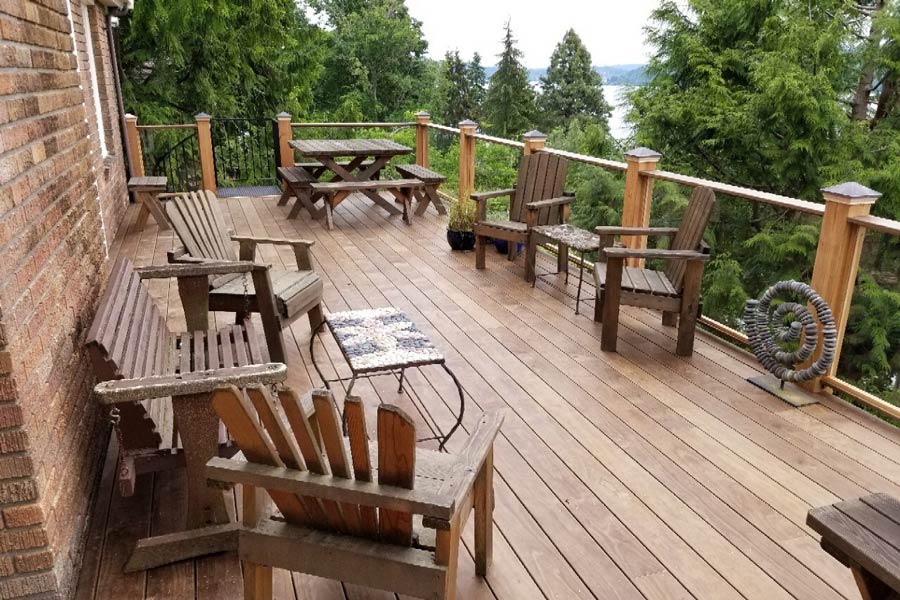
By the mid-20th century and the rise of automobiles, streets got noisier and more dangerous. Families moved their outside space from the street-facing front porch to the backyard area, which led to the growing popularity of decks.
Today, there are more options for decking materials, such as cedar, fir, yellow pine, exotic hard woods, and composite decking. For framing, ground-treated preservative wood and high-pressure infused treated pine makes the structure more resistant to rot, fungus decay and termites.
Probably the most common decking material today is composite. Here is the range of quality:
- GOOD: Wood-Plastic Composite (WPC): The most common type, combining wood and plastic fibers.
- BETTER: Capped Composite: Features a protective plastic shell for enhanced resistance to elements.
- BEST: PVC Decking: Purely plastic (no wood) but grouped with composites because of its low maintenance and wood-look options.
One of the best-known composite decking manufacturers is Trex, started in the 1980s. Now there are numerous manufacturers and all offer options of good, better and best decking.
Railings can range from the traditional picket and post to modern glass panels.
Because there are so many options for decking, I recommend a visit to lumber stores. Dunn Lumber has a good display of materials and offers free samples for you to take home and consider.
Most decks require a permit to build, and for good reason. Decks can and do fail due to bad framing and lack of flashing. A permit requires regular inspections by local city building experts at different stages of construction to ensure the final structure is safe.
For instance, an elevated deck can detach from the house because the ledger board was improperly attached to the house. (FYI: A ledger board is a horizontal board, typically 2×8 or larger, that connects the deck frame directly to the house’s rim joist, supporting the deck’s joists at one end. This part of the deck is critical to keep deck from separating from house.)
One important detail is “top flashing,” which is metal Z-flashing (drip cap) over the top of the ledger and joists. This flashing overlaps the back flashing to shed water down and away from the house. We have repaired hundreds of rotten walls and deck framing due to this missing or improper top flashing.
Another critical part of building a safe deck is the use of Simpson Strong Ties. These are structural connectors and fasteners that create strong, continuous load paths. They secure buildings from foundation to roof, making them more resilient against wind and earthquakes.
If you need a new deck, contact Snowridge. Whether you need a completely new one or an overhaul of your existing, we can help create a safe and enjoyable outside experience for you and your family.
Need help with a Decking Project?
Roof Deck Systems - And Reason for Their Failures
Roof deck systems described below are designed so water can drain freely off a flat roof surface. This will minimize water ponding on the roof.
Water ponding becomes a problem when it pools high enough that it is against the siding or doors. When it’s too high, it may leak over and behind flashing into walls. When water leaks into walls and cannot dry or escape, it will cause mold and then dry rot on structural framing.
Some of the worst rot we have repaired comes from leaky roof decks, so we pay a lot of attention to building or repairing roof decks.
Some Components of a Roof Deck:
Drainage Systems
DROP DRAINS are attached directly to surface of the flat roofing membrane material. Smaller 1-1/2-inch diameter drop drains get clogged from leaves and debris, which causes excessive pooling. They require scheduled cleaning and inspection of the roofing seal around them. They’re sometimes hard to locate if deck framing is covering it. They often leak because the roofing membrane seal around drop drain fails.
SCUPPER DRAINS are shop-fabricated sheet metal drains that are channeled through a side balcony wall instead of the roof surface. The scupper drain usually has a larger square opening, so it does not clog as easily, and can be seen for inspections even with deck framing on top of roofing. They often leak because the roofing membrane seal around the scupper fails.
OPEN ROOF DRAINAGE is where a lower sloped roof deck is open on one side, which allows water to drain directly off the roof into the gutter. This simple system is best for drainage; all that’s needed is the proper slope to drain.
Flashing Systems
L-shaped flashing (called roof-to-wall flashing) is designed to keep water from getting inside the walls around the roof deck.
Metal pan shape flashing (door pan flashing) fits under the door threshold to protect the flooring and walls from water.
If either of these flashings is missing or fails, water can leak into walls. Flashings also often leak because the roofing membrane seal around the flashing fails.
Roofing Membrane Types
ASPHALT / TAR ROOFING – this is old school, usually the least expensive, and when new it’s very durable. However, when old, it cracks easily. It’s also very heavy and tar patches are messy. The wood deck structure is built over it and will rest upon it.
PVC OR TPO ROOFING – Very clean and simple. It uses either heat welds or chemical glue to mend together and patch. It will last a long time and holds up well. It requires flashing and drains that can be welded. The wood deck structure is built over and rests upon it.
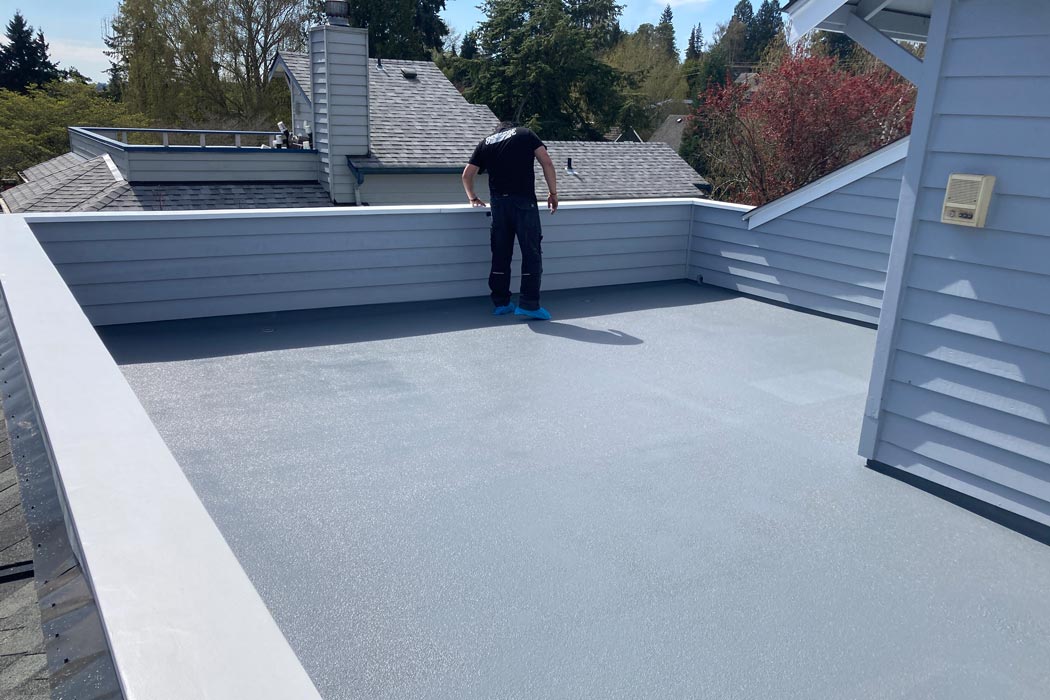
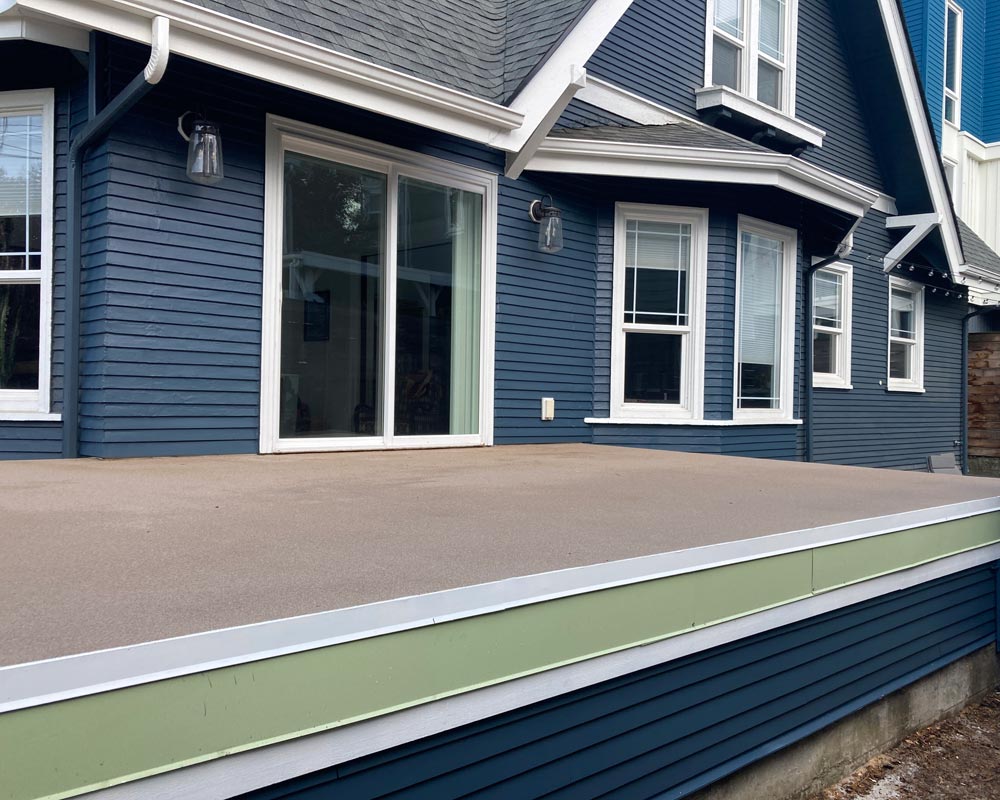
POLYURETHANE ROOF DECK – this is my favorite because it is a very tough roofing membrane system. It’s the same system used on commercial waterproof parking structures floors. It is also the finished surface of roof deck, so it doesn’t require wood frames over it. It’s the lightest weight of roof membranes and comes in different colors and finishes. Because it is rolled on, it’s all one surface with no welds.
Roof Deck Open Railing and Solid Balcony Half Walls
A common reason for roof deck leaks is the open railing where the post bases are bolted to the roofing. The bolts penetrate the roofing membrane and are commonly just sealed with a caulking product. The caulking fails – a lot.
Through the years, we have learned to set post bases on blocks to raise them off the deck if we must deck mount them. I much prefer to side mount the post on the side of the deck, bolted to the fascia or sideboard. Then there or no bolt penetrations on the deck membrane.
Solid Balcony Half Walls and Open Railing
When a wood cap is installed on the walls, often there’s no flashing under it. When cracks open at the corners, or where two caps meet, water penetrates. This can rot out the balcony wall and will sometimes destroy the roof deck. Installing a metal flashing cap on top of the wood cap helps. But it’s a very exposed area and should be maintained. I much prefer a simple opened railing to the half walls.